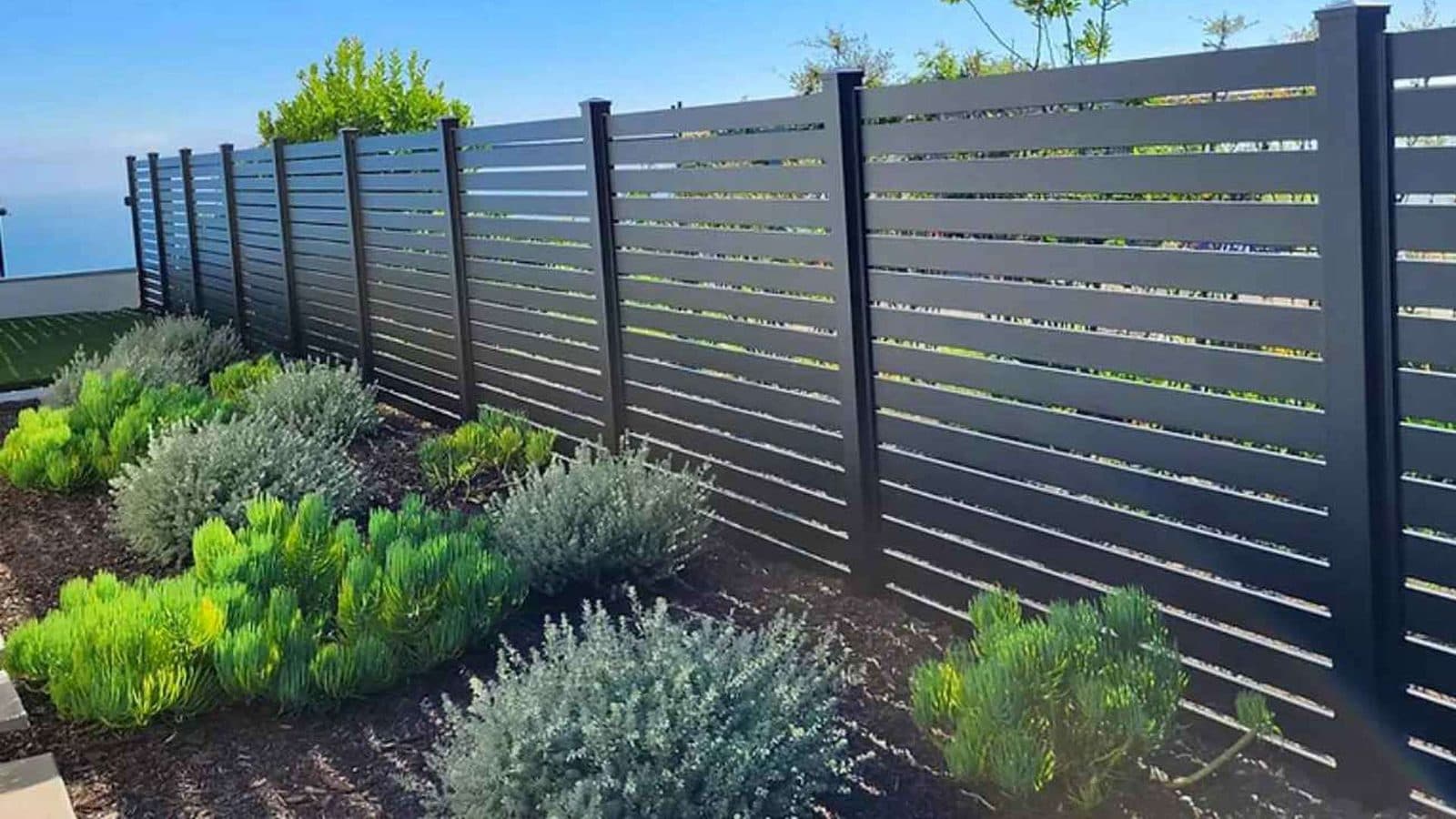
Ask what the cheapest fence is and you get one number back: the price of the panel. That is the easy half. The harder half is what the fence costs you between now and the day you replace it, which in South East Queensland means sun, humidity, termites and a storm season every summer. This compares five common fencing materials on both, with the prices honestly labelled, including the case where we are not the cheap answer. Composite is the sixth, and it sits in a different bracket again, so we have given it its own comparison: aluminium against composite fencing.
The quick answer
Cheapest to buy: wire and mesh, then treated pine paling, then Colorbond steel, then PVC, then aluminium.
Cheapest to keep: aluminium and PVC, which need washing and nothing else. Timber needs oil or paint every few years and eventually replacing.
A treated pine paling fence is commonly quoted around $75 to $120 a metre installed in South East Queensland. Aluminium supply-only lands near $150 a metre.
The biggest saving on any fence is not the material. It is supplying it yourself and splitting a boundary fence with the neighbour.
The order, cheapest first
These are indicative supply figures for a 1800mm high boundary fence in South East Queensland, expressed per lineal metre so different panel widths can be compared against each other. Supply means the material only, before posts are concreted and before anyone is paid to build it.
| Material | Indicative supply, per metre | Realistic life in SEQ | Upkeep |
|---|---|---|---|
| Wire, mesh or chain link | $25 to $60 | 10 to 20 years | None, but it is not a privacy fence |
| Treated pine paling | $40 to $70 | 10 to 15 years | Oil or paint every 2 to 4 years |
| Hardwood paling | $70 to $110 | 15 to 25 years | Oil every 2 to 4 years |
| Colorbond steel | $55 to $95 | 15 to 25 years | Wash. Repair where it is scratched through |
| PVC | $80 to $130 | 15 to 20 years | Wash. Can chalk and yellow in full sun |
| Aluminium | $130 to $170 | 25 years and beyond | Wash |
Installed prices sit well above these. Fencing contractors across the region commonly quote treated pine paling in the $75 to $120 a metre range installed and hardwood higher again, because labour, post holes and concrete cost the same whatever the panel is made of. That is covered in more detail in our note on what fence installation labour costs.
The cheapest fence to buy is rarely the cheapest to own
Take a 20 metre back boundary and run it out fifteen years, which is roughly one fence cycle in this climate.
Treated pine, bought at about $55 a metre supply. $1,100 up front. Oiling it every three years costs materials plus a weekend each time. Somewhere between year ten and year fifteen the palings cup, the rails sag and the posts go at the ground line, and you buy it again.
Colorbond steel at about $75 a metre supply. $1,500 up front and very little after that, unless a mower or a whipper snipper takes the coating off near the ground, where Brisbane humidity finds the bare steel.
Aluminium at about $150 a metre supply. $3,000 up front and then nothing. No repainting, no rust, no rot, no second fence.
On those numbers the timber fence is cheaper for the first decade and roughly level by the time it needs replacing. Which is genuinely cheapest depends on how long you intend to be there. If you are selling in three years, the cheap fence wins on cash. If this is the house you stay in, the sums move the other way, and they move faster on a boundary you cannot easily get back to once landscaping goes in.
The honest version
We make aluminium fencing, so treat the comparison above as what it is. Aluminium is the dearest of these five to buy. What it is not is the dearest to own, and on a fence line that is hard to reach again, that is usually the number that matters.
Timber: cheapest to buy, dearest to keep
Treated pine paling is the default cheap boundary fence in Brisbane for good reason. The material is inexpensive, every fencer builds it, and a competent DIYer can put one up with hand tools.
What it costs you is attention. Timber in this climate moves. Humidity swells it, the summer sun dries it out, and the cycle cups and twists the palings. Ground contact is where it finishes: the post rots at the soil line while the rest of the fence still looks serviceable, which is why timber fences usually fail post first in a storm. Termites are a live risk in South East Queensland even with treated pine, which resists them rather than being immune.
If timber is the right answer for your budget, it is the right answer. Just price the oil and the weekends into the decision, and put the money into the posts rather than the palings. The full comparison is in aluminium against timber on cost.
Colorbond steel: the Brisbane default
Colorbond sits in the middle on price and is the most common new fence in the region. It goes up quickly, gives full privacy, comes in the colour range everyone knows and needs nothing beyond a wash.
Its weakness is that it is steel under the coating. Anywhere the coating is broken, at the ground line, at a scratch, at a cut edge, corrosion starts, and Brisbane humidity and coastal salt both speed it up. Sheets also dent, and a dent does not come out. It is a very good fence that has one failure mode, and that failure mode is exactly what aluminium does not have. Side by side, the difference is set out in aluminium against Colorbond.
PVC and mesh: where they genuinely make sense
PVC fencing is popular for picket front boundaries and semi-privacy runs. It never rusts and never needs painting, which is its whole appeal. In full western sun some PVC chalks and yellows over time, and it is the least forgiving of the five if something heavy hits it, because it cracks rather than bends.
Wire, mesh and chain link are the cheapest fences you can buy, and there is nothing wrong with them where a boundary needs to be defined rather than hidden: a back paddock, a side run beside a shed, a temporary line while you save for the real fence. They give no privacy at all, which is the reason most suburban buyers rule them out in the first five minutes.
Aluminium: what the extra buys
Aluminium does not rust, rot or warp, and the powder coat holds its colour through sun and coastal salt. There is no repainting cycle. That is the entire pitch, and it is why the running cost column is empty rather than small.
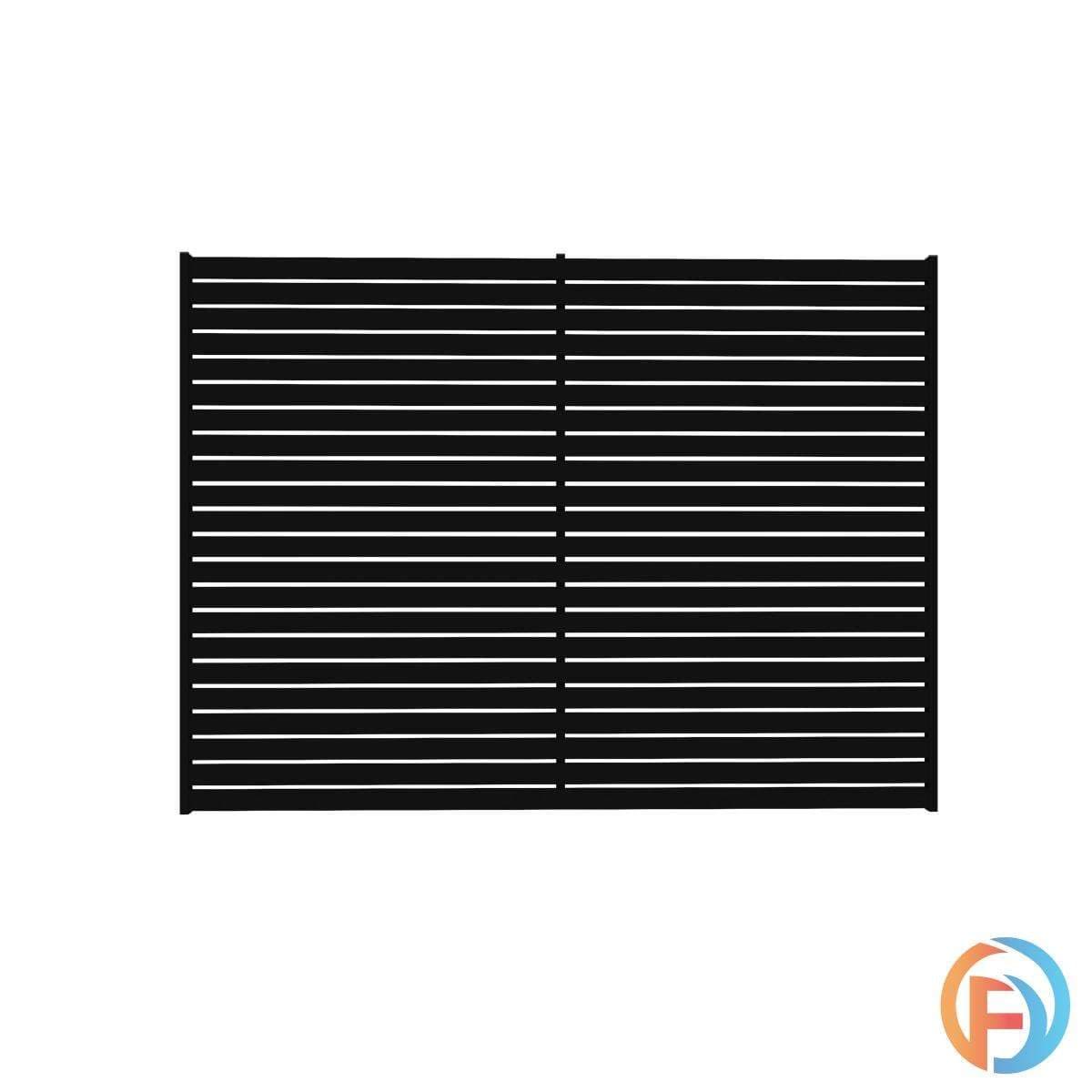
FY panel prices start at $279 for a horizontal slat panel, $368 for vertical picket and $399 for a welded vertical blade panel, each 2400mm wide (2350mm in picket) in 1200mm or 1800mm heights. Add a post from $41.99, a cap at $5 and a four-pack of brackets at $15 for each bay and a slat fence lands close to $150 a metre supplied. The full breakdown is in what aluminium fencing costs in Brisbane.
Four ways to cut the cost of any fence
The material is not where most of the money is. These four moves save more than switching from one material to another.
Split it with the neighbour. A dividing fence on a common boundary is shared under Queensland law, and the Notice to Contribute is the mechanism. Half the fence is the single biggest saving available to you. See how the Notice to Contribute works.
Supply it yourself and build it yourself. Labour is roughly half of an installed fence price. Aluminium panels bolt to brackets with no welding, which is the DIY route most of our supply-only customers take.
Stay on standard sizes. A run that divides evenly into 2400mm bays costs less than one that needs a custom last panel, so set the post positions before you dig.
Pick it up rather than have it delivered. Pickup from the Slacks Creek yard is free. Delivery is quoted per suburb and is a real line on a small order.
So what is the cheapest fencing option?
For pure purchase price, wire or mesh, and then treated pine paling. For a private boundary fence you have to buy once, treated pine remains the cheapest way to get there, with Colorbond close behind and far less work.
For the lowest total cost across the life of the fence, on a boundary you would rather not revisit, the answer is aluminium or PVC, because the maintenance column is empty. Which of those two depends on whether the run gets hard western sun and whether anything is likely to hit it.
If you want the comparison against your actual fence line rather than a table, send the length and height through. We quote supply-only and installed side by side so you can see exactly what the labour is worth to you.
Frequently asked questions
What is the cheapest fencing option in Australia?
Wire and mesh fencing is the cheapest to buy, typically $25 to $60 a metre in materials, but it gives no privacy. For a private boundary fence, treated pine paling is the cheapest common option, around $40 to $70 a metre in materials and commonly $75 to $120 a metre installed in South East Queensland.
Is Colorbond cheaper than aluminium fencing?
Yes, to buy. Colorbond steel typically lands around $55 to $95 a metre in materials against $130 to $170 for aluminium. The gap narrows over the life of the fence, because Colorbond is steel under the coating and corrodes anywhere the coating is broken, while aluminium does not rust at all.
How much does it cost to fence a 20 metre boundary in Brisbane?
As a rough supply-only guide: about $1,100 in treated pine, about $1,500 in Colorbond and about $3,000 in aluminium, before posts are concreted and before labour. Installed, expect roughly double for timber and steel. A dividing fence on a common boundary can be shared with the neighbour, which halves your side of it.
Does a cheap fence cost more in the long run?
Often, yes, in this climate. Timber needs oiling or painting every two to four years and typically needs replacing between year ten and year fifteen in South East Queensland. Aluminium and PVC need washing and nothing else. Whether the cheap fence is genuinely cheaper depends mostly on how long you plan to stay.
Can I save money by installing the fence myself?
Yes, and it is the largest saving after sharing the cost with your neighbour, because labour is roughly half of an installed price. Aluminium panels are made to your measurements and bolt to brackets with no welding and no cutting on site, so a straight run is within reach of a confident DIYer over a weekend.
Is aluminium fencing worth the extra cost?
It is where the fence has to last and you do not want to revisit it: a boundary behind landscaping, a coastal or humid site, or a house you intend to stay in. It is not, if you are selling soon or the fence is temporary. We would rather tell you that than sell you the wrong fence.
Do you supply pool fencing?
No. We do not supply pool-safety barriers, and our fencing is not sold or certified as pool-compliant. For boundary, privacy and front fencing in any of the profiles above, we can help.
Prices are indicative South East Queensland figures at the time of writing and move with material costs, site access and the length of the run. Treat them as a starting point, not a quote.
Working out what your fence line needs? Tell us the run and the height and we will quote it, supply-only or installed.
- Brisbane-based supplier
- Aluminium fencing & gates
- Supply or installed