
Corner blocks give you extra light, one less neighbour and real street presence: plus fence rules that catch plenty of SEQ homeowners off guard. The fence nearest the intersection sits inside a sight triangle, where what you can build is tighter than anywhere else. Here is what the rules say, and how to fence a corner without losing your privacy.
The quick answer
A fence up to 2 m generally needs no building approval in Queensland: corner blocks are a common exception.
Inside the corner sight-line truncation, the Queensland Development Code keeps fences to 1 m or less.
On shallow corner lots, nothing over 2 m within a 9 m × 9 m truncation at the corner.
Where solid fencing is restricted, open-style panels (around 50% open: blade or picket) are the usual compliant choice. Rules vary by council.
Why corner blocks have special fence rules
On a corner block, one factor outranks the usual fence considerations: visibility. A driver at the intersection needs to see cross-street traffic, plus pedestrians and cyclists about to step off the kerb: and a tall solid fence at the corner point blocks exactly that view. The Queensland Development Code (QDC MP 1.2), the state siting standard for houses, is explicit: structures on corner sites must provide adequate sight lines.
The same logic applies at your driveway: a tall solid run against the crossover can hide a footpath user from a reversing driver, so open fencing near driveways is smart design even where no rule demands it.
What is a truncation?
A truncation is a corner cut: instead of your two street boundaries meeting at a sharp point, the corner is trimmed off on an angle. Many SEQ corner lots are already truncated on the title, which is why the corner looks “clipped” on the survey plan.
For fencing, the QDC defines the zone precisely: fences, screens, retaining walls and other structures stay at 1 m or less within a truncation formed by three equal chords of a 6 m radius curve at the corner of the two road frontages. In plain English: measure about 6 m along each street boundary from the corner, close the area off with three angled lines: everything inside is a low-fence zone. Councils often call it the visibility triangle; the rule sits in both QDC parts (MP 1.1 for lots under 450 m², MP 1.2 above).
Fence height limits on a corner block
The state-level provisions at a glance:
| Where on the block | What applies |
|---|---|
| Inside the sight-line truncation | Fences and other structures max 1 m (QDC acceptable solution) |
| Corner of a shallow lot (average depth 24 m or less) | Nothing over 2 m within a 9 m × 9 m truncation at the corner |
| Anywhere on the block | Over 2 m above natural ground needs building approval: including fence-plus-retaining-wall combinations |
| Standard side and rear boundaries | 1.8 m is the usual full-privacy dividing height: see our Queensland fence height guide |
Heights measured above natural ground; summarised from QDC MP 1.1/1.2 and council guidance. Your council can apply different controls.
Open-style fencing: the compliant choice where solid fails
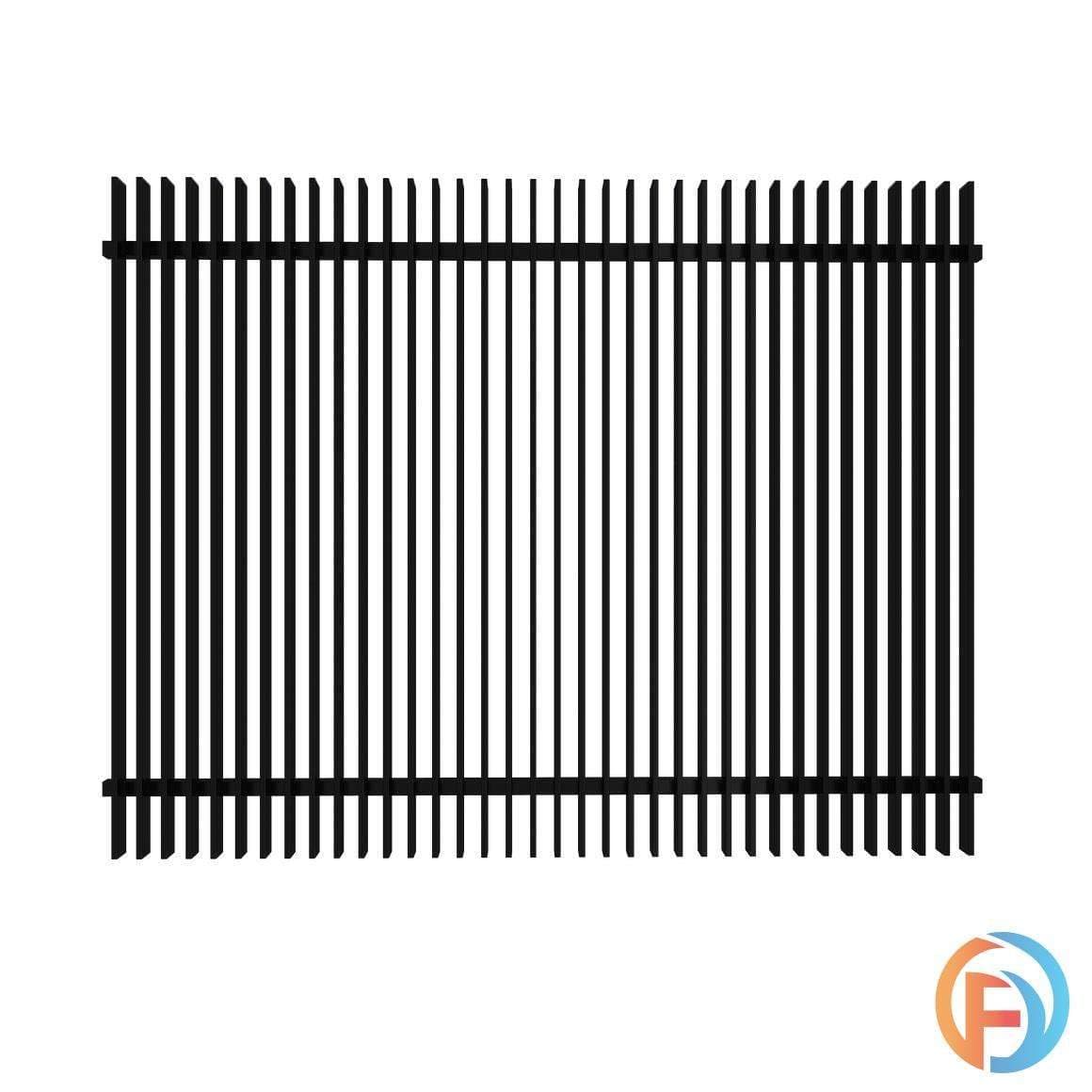
Where solid fencing is restricted near corners and frontages, the fix is openness. The City of Gold Coast, for example, limits fencing within the corner to 1 m so traffic on both roads keeps a clear line of vision, and notes development approvals that required front fencing to be 50% open. Estate covenants across SEQ commonly ask for the same.
An aluminium vertical blade fence is built for this: at around 50% open you keep a clear boundary and street appeal while drivers read the traffic through it. A picket fence does the same job in a more traditional style: see our comparison of slat, picket and blade styles.
One caveat: inside the sight triangle the QDC caps any structure at 1 m: even see-through. For anything taller there, talk to your council or a private certifier first.
Keeping your privacy on the rest of the block
The corner rules only bite near the corner. On the rear boundary and the side away from the street, a near-solid 1.8 m slat screen gives full privacy; our guide to privacy fence slat spacing covers how tight the gaps should be.
The classic pattern is a mixed run: solid slats across the back and private side, open blade or picket along the secondary frontage, then a drop to 1 m through the truncation: in matching powder-coated aluminium, the transition looks deliberate.
Check your council before you build
The QDC is only the state baseline: its own text warns that local planning schemes and local laws can add to or replace it. Brisbane City Council requires building approval once a fence tops 2 m above natural ground, while Toowoomba Regional Council flags extra height restrictions on corner allotments and recommends seeking advice first. Heritage overlays, main roads and estate covenants add more. Five minutes on your council’s website (or a call to a private certifier) is cheaper than relocating a fence.
How FY panels handle custom corner runs
Corner blocks rarely suit off-the-shelf fencing, so every FY panel is made to order at our Slacks Creek yard in Logan: stepped heights along the secondary frontage, an angled panel cut to your truncation, open styles for the street sides, solid slats behind: one colour, one design.
Panels bolt together for DIY installation: our panel installation guide walks through it: or we can arrange professional installation. We deliver across South East Queensland only: Brisbane, Logan, Ipswich, Gold Coast, Sunshine Coast, Toowoomba and surrounds; further afield, collect from the yard or arrange your own freight. Repeat customers earn loyalty discounts.
- Explore our aluminium fencing range for corner blocksOpen blade and picket panels, solid slat screens: made to order, with a free quote online.
Frequently asked questions
What are the corner block fence rules in Queensland?
The Queensland Development Code sets the baseline: fences inside the corner truncation stay at 1 m or less, and anything over 2 m needs building approval. Councils add their own controls, so confirm your address.
How high can a fence be on a corner block?
Away from the corner, the same as any block: generally up to 2 m without building approval, 1.8 m being the usual full-privacy height. Within the sight-line truncation the QDC allows 1 m maximum: anything taller usually needs approval.
What is a truncation on a corner block?
The angled cut where your two street boundaries meet. For fencing, the QDC draws it as three equal chords of a 6 m radius curve: a small triangle where fences stay at 1 m or below so drivers can see across.
Do the corner rules apply to open, see-through fencing too?
Inside the truncation, yes: the 1 m limit covers any structure, open or solid. Open styles earn their keep along the frontages, where councils and covenants often restrict solid fences but accept panels around 50% open.
Can I still have a private backyard on a corner block?
Yes. The tight rules only cover the corner zone and, in some areas, the street frontages. Your rear boundary and non-street side can carry a near-solid 1.8 m aluminium slat screen, stepping down to an open style near the corner.
Does FY Fencing supply panels for corner truncations?
Yes. Our panels are made to order in Slacks Creek: angled truncation panels, stepped runs and mixed open-and-solid layouts to match your survey plan: DIY bolt-together, or professionally installed across our SEQ delivery area.
This article is general information only, not planning, building or legal advice. Fence siting rules come from the Queensland Development Code and each council’s planning scheme; they vary between councils and can change. Confirm the requirements for your address with your council or a private building certifier before you build.
Working out what your fence line needs? Tell us the run and the height and we will quote it, supply-only or installed.
- Brisbane-based supplier
- Aluminium fencing & gates
- Supply or installed