
Most dogs never test a fence. The ones that do only need one weakness: soft soil under the bottom rail, a foothold halfway up, a gap wide enough for a determined head, or a gate left unlatched. Dogs escape in just four ways, and all four can be designed out.
The quick answer
Most dogs are contained by 1.2 to 1.5 m; athletic jumpers need 1.8 m.
Climbers are beaten by a smooth vertical face with no footholds.
Keep slat gaps too narrow for the head: if the head fits, the body follows.
Stop diggers with a bottom rail close to the ground over a hard edge.
Gates cause more escapes than fences: fit self-closing hinges and a solid latch.
The four ways dogs get out: and how fence design beats each one
Work out which escape artist you live with: each has a different fix:
1. Jumpers
Clear the top from a standing start or run-up. Beaten by height: and by removing launch pads: bins, wood piles and furniture against the fence are half the climb for free.
2. Climbers
Scramble up anything with a foothold: chain-link mesh, horizontal rails, rough palings. Beaten by a smooth vertical surface with nothing to grip.
3. Diggers
Tunnel under the bottom edge, wherever the soil is softest. Beaten by a low bottom rail and a hard surface along the fence line.
4. Squeezers
Small dogs and puppies push through picket gaps and under gates. Beaten by tight, consistent spacing from first slat to last.
How high should a dog fence be?
It depends on the dog, not just the breed: a fit dog can jump well over its own shoulder height. As a general guide:
| Dog size | Typical fence height | What matters most |
|---|---|---|
| Small (under ~10 kg) | 0.9 to 1.2 m | Gaps and digging, not height |
| Medium (~10 to 25 kg) | 1.2 to 1.5 m | Height plus a smooth, foothold-free face |
| Large (25 kg and up) | 1.5 to 1.8 m | 1.8 m is the safe default |
| Escape artists & athletic breeds | 1.8 m minimum | Full height, zero footholds, nothing to launch from |
A general guide only: if your dog has cleared a fence before, size up.
Helpfully, 1.8 m is also Queensland’s standard boundary fence height, and fences up to 2 m generally need no building approval: our guide to Queensland fence height rules covers front fences and corner blocks too.
Why climbers can’t beat smooth vertical aluminium
Chain-link is effectively a ladder: every diamond in the mesh is a toehold. Timber palings are not much better: the inside rails give a dog a step, and rough timber offers grip all the way up.
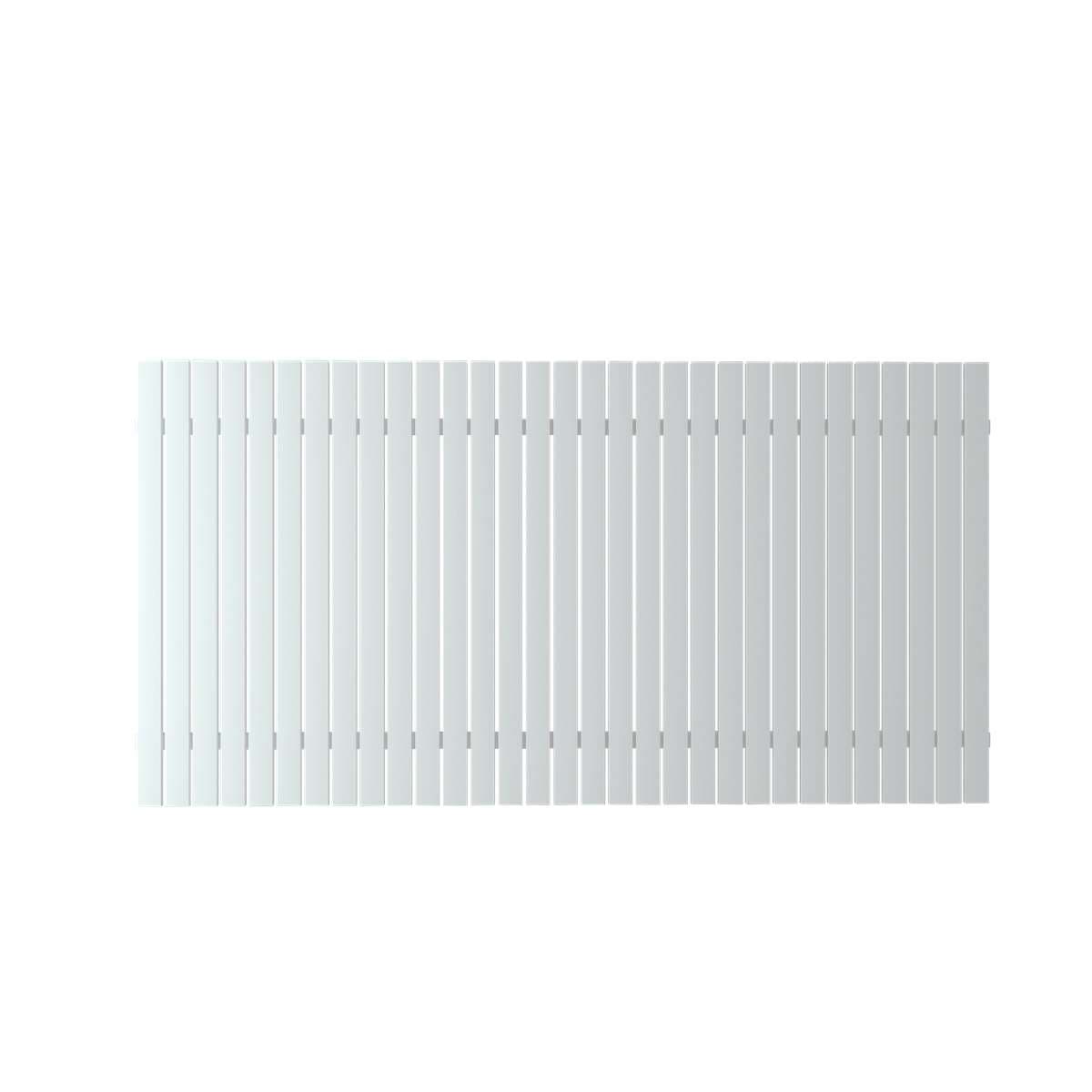
A powder-coated aluminium panel is a smooth, slippery, vertical face with nothing to hook a paw over. Vertical picket and blade styles suit determined climbers best (no horizontal edge below the top rail) and if you prefer horizontal slats, keep the gaps too narrow for a paw. Compare the looks in our guide to slat, picket and blade fence styles, or browse our aluminium fence panels.
Slat gaps: keeping small dogs in and the barking down
The rule for squeezers is simple: if the head fits through, assume the body will follow. For toy breeds and puppies that means gaps of roughly 50 mm or less. Our panels are made to order, so spacing can be set to suit the smallest dog in the house.
If your dog patrols the fence line barking at every passer-by, a full-privacy panel often helps: many owners find that what the dog can’t see, it doesn’t react to. Our slat spacing guide walks through the options, from near-solid privacy to open screening.
Stopping the diggers
Dogs dig where the ground is soft, so the fix lives at the bottom of the fence:
Keep the bottom rail close to the ground. Aluminium holds a straight, consistent line, with no rot opening gaps over time.
Put something hard at the base. A mowing strip, pavers or a plinth under the panel takes the fun out of digging.
Move the garden beds. Soft, freshly mulched soil against the fence is an open invitation.
Watch the slope. Stepped panels can leave triangular gaps underneath: raked panels or plinths close them off.
Gates: the weak point in every dog fence
Most “fence” escapes are really gate escapes: a visitor who didn’t latch it, a delivery driver, a gust of wind. Two pieces of hardware close the loophole: self-closing hinges that swing the gate shut behind everyone, and a reliable latch that catches every time. We stock D&D self-closing hinges and latches in our shop, and our gate hardware guide explains which combination suits which gate.
Match the pedestrian gate to the fence: a 1.8 m fence with a 1.2 m gate is only a 1.2 m fence to your dog. Keep ground clearance tight over the path and fit drop bolts to double gates. Our aluminium gates guide covers sizing and setup.
Containment is your responsibility in Queensland
Registering a dog in Queensland comes with a matching obligation: keeping it contained to your property. Councils such as Brisbane and Logan expect fencing adequate to stop your dog escaping and wandering at large: and a wandering dog can mean a fine. Tethers, wire runners and electronic collars generally do not count; councils want a physical fence. Restricted and regulated dog categories have stricter enclosure rules: confirm the specifics with your council.
Frequently asked questions
How high should a fence be for a dog?
As a general guide: 0.9 to 1.2 m for small dogs, 1.2 to 1.5 m for medium, 1.5 to 1.8 m for large breeds, and 1.8 m for athletic dogs and known jumpers. If yours has cleared a fence before, go taller.
What is the best fence for dogs in Australia?
A smooth vertical panel at the right height, with tight gaps, a hard edge at the base and a self-closing gate. Powder-coated aluminium ticks every box: no footholds, no rot opening gaps, and made-to-order spacing for small dogs.
Can dogs climb aluminium fences?
It is very difficult. A vertical picket or blade panel has no horizontal edges below the top rail and a slippery powder-coated surface: unlike chain-link or timber rails, which act like a ladder.
What gap between slats stops a small dog squeezing through?
Work off the head: if it fits through a gap, assume the rest will follow. Around 50 mm or less suits most small breeds, tighter again for puppies: and FY panels are made to order, so spacing can match your smallest dog.
How do I stop my dog digging under the fence?
Keep the bottom rail close to the ground and put a hard surface at the base (a mowing strip, pavers or a plinth) and keep soft garden beds off the fence line.
Do I legally have to fence my dog in Queensland?
Yes: Queensland councils require dogs to be contained to their property with an adequate fence or enclosure, and tethers or electronic collars are generally not accepted. Restricted and regulated categories have stricter rules: check your council.
A quick note. Heights and gaps here are practical design guidance, not a guarantee: motivation beats averages, so build for the dog you have. For restricted or regulated dog categories, confirm requirements with your council first.
Working out what your fence line needs? Tell us the run and the height and we will quote it, supply-only or installed.
- Brisbane-based supplier
- Aluminium fencing & gates
- DIY or installed